


5 Shoulder Exercises to Fix Neck Pain & Slouching After 40 (While Sitting at Your Desk)
If neck pain and rounded shoulders are making you feel 10 years older, these 5 simple exercises strengthen and stabilize your shoulders to relieve tension and restore proper posture—even if hormonal changes are affecting your joints.
Katia
1/22/20268 min read
5 Shoulder Exercises to Fix Neck Pain & Slouching After 40 (While Sitting at Your Desk)
If neck pain and rounded shoulders are making you feel 10 years older, these 5 simple exercises strengthen and stabilize your shoulders to relieve tension and restore proper posture—even if hormonal changes are affecting your joints.
Your Shoulders Are Screaming. And You've Been Ignoring Them.
There it is again. That dull, nagging ache between your shoulder blades. The stabbing pain at the base of your neck. The way your shoulders feel like they're carrying invisible weights all day long.
You try to sit up straight, but within 5 minutes you're slouched forward again—shoulders rounded, neck craned toward your screen, upper back screaming in protest.
Maybe you've tried stretching. Maybe you've gotten massages. Maybe you've bought ergonomic chairs and standing desks. They help for a day or two, then the pain comes roaring back.
If you're a woman over 40, here's what you need to know: Your neck pain and shoulder tension aren't just from poor posture—they're from weak, unstable shoulder muscles that have been compromised by hormonal changes.
After 40, declining estrogen affects joint lubrication and tendon elasticity. Your shoulders literally don't move the way they used to. And no amount of stretching will fix what is actually a strength and stability problem.
Let me show you the 5 simple shoulder exercises that strengthen, stabilize, and restore proper function—so you can finally relieve that chronic neck pain and stop feeling like you're aging faster than you should.
Watch the complete video tutorial here →
Why Neck Pain and Shoulder Problems Get Worse After 40
Before we jump into the exercises, you need to understand what's actually happening in your body—because this isn't your fault, and it's not just "bad posture."
1. Estrogen Decline = Joint Problems
Estrogen plays a crucial role in maintaining joint lubrication and tendon elasticity. As it declines during perimenopause and menopause:
Your shoulder joints become stiffer and less mobile
Tendons lose flexibility and become prone to inflammation
Joint capsules tighten, restricting range of motion
Recovery from strain takes longer
2. Years of Compensation Patterns
After decades of:
Carrying kids on one hip
Hunching over laptops and phones
Holding tension in your shoulders when stressed
Sleeping in awkward positions
Your shoulders have developed dysfunctional movement patterns. Certain muscles (like your upper traps) are overworked and tight. Others (like your lower traps and serratus anterior) are weak and underactive.
3. Forward Head Posture Creates a Pain Cycle
For every inch your head moves forward from neutral alignment, it adds 10 pounds of strain on your neck and shoulders. Most women over 40 carry their head 2-3 inches forward—that's 20-30 extra pounds of pressure causing:
Chronic neck pain
Tension headaches
Upper back knots
Shoulder blade pain
Reduced lung capacity (yes, poor posture affects your breathing)
4. Weak Rotator Cuff = Unstable Shoulders
Your rotator cuff muscles stabilize your shoulder joint. When they're weak (which happens with age and disuse), your shoulder becomes unstable—causing pain, clicking, and that feeling like your shoulder might "give out."
Here's the good news: Targeted strengthening exercises can reverse all of this—even after 40, even with hormonal changes, even if you've been dealing with this for years.
The 5 Shoulder Exercises That Actually Fix the Problem
These exercises strengthen the exact muscles that stabilize your shoulders, improve posture, and alleviate neck pain. You can do them at your desk, on your living room floor, or anywhere you have a few minutes.
Exercise #1: Wall Angels (Restore Proper Shoulder Position)
What It Does
Wall Angels restore proper shoulder blade positioning while strengthening the muscles that hold your shoulders back and down (lower traps, rhomboids, and serratus anterior).
Why It Works After 40
This exercise directly counteracts forward shoulder posture by retraining your shoulder blades to move correctly. It also improves thoracic spine mobility, which decreases with age and contributes to slouching.
How to Do It
Stand with your back against a wall, feet about 6 inches away
Press your lower back, mid-back, and head against the wall
Raise your arms to shoulder height, elbows bent 90 degrees (like a goalpost position)
Press your elbows and backs of hands against the wall
Slowly slide your arms up the wall as far as you can while maintaining contact
Lower back down with control
Repeat 10-12 times
Common mistake: Arching your lower back excessively. Keep your ribs down and core gently engaged.
Modification: If you can't keep your arms on the wall, move your feet further from the wall or reduce your range of motion.
Exercise #2: Scapular Push-Ups (Strengthen Shoulder Blade Stabilizers)
What It Does
Scapular push-ups isolate and strengthen your serratus anterior—the muscle responsible for keeping your shoulder blades flat against your ribcage and preventing "winging."
Why It Works After 40
Weak serratus anterior is one of the primary causes of shoulder instability and upper back pain in women over 40. This exercise specifically targets it without requiring upper body strength.
How to Do It
Start in a plank position on your hands (or modified on your knees)
Keep your arms straight throughout the movement
Let your shoulder blades pinch together (your chest drops slightly toward the floor)
Push through your hands to spread your shoulder blades apart (your upper back rounds slightly)
Repeat this pinching and spreading motion 12-15 times
Key point: Your arms stay straight—this is ALL shoulder blade movement, not arm movement.
Modification: Do this against a wall if floor push-up position is too challenging.
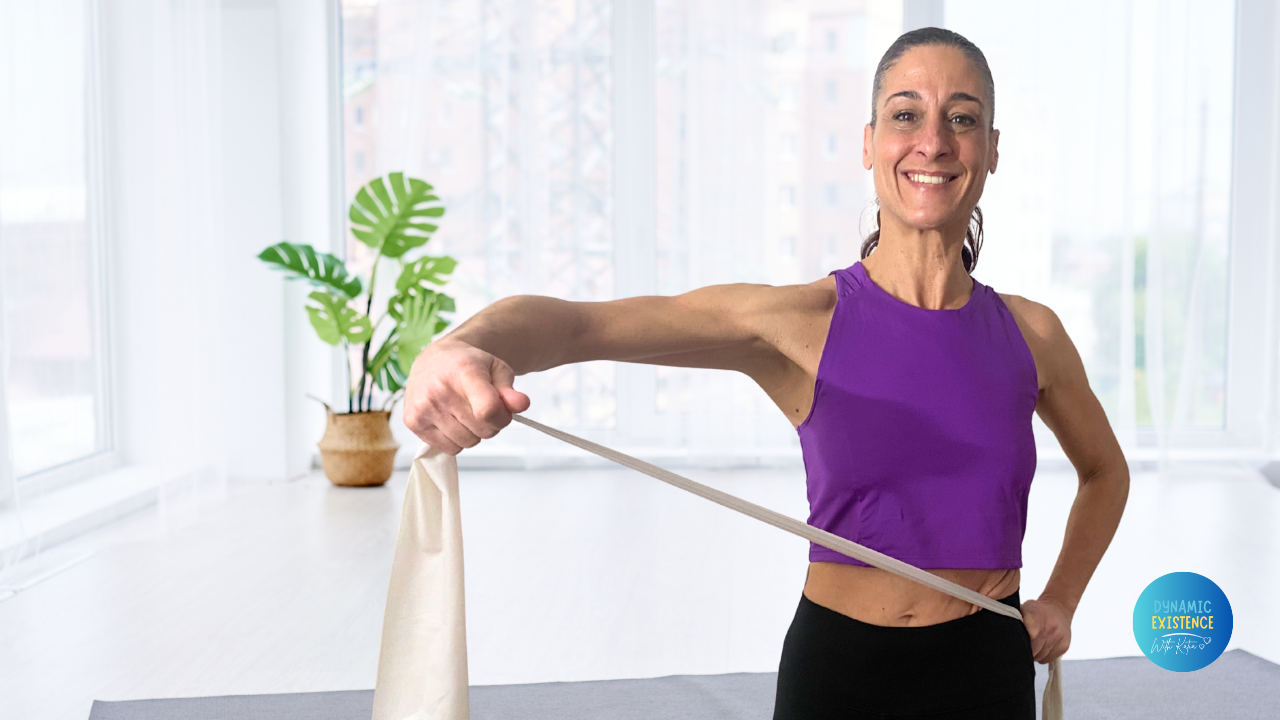
Exercise #3: External Rotation with Band (Strengthen Rotator Cuff)
What It Does
This exercise specifically strengthens your external rotators—the most commonly weak and injured rotator cuff muscles.
Why It Works After 40
Hormonal changes make rotator cuff tendons more vulnerable to injury. Strengthening these muscles proactively prevents tears and reduces shoulder clicking and instability.
How to Do It
Tie a resistance band to a door handle at elbow height
Stand sideways to the door, working arm farthest from anchor
Hold the band with elbow bent 90 degrees, tucked against your side
Rotate your forearm outward (like opening a door), keeping elbow stationary
Return with control
Complete 12-15 reps per side
Common mistake: Letting your elbow drift away from your body. Keep it pinned to your side.
Progression: Use a thicker band or step further from the anchor point for more resistance.
Exercise #4: Prone Y-Raises (Activate Lower Traps)
What It Does
Y-raises strengthen your lower trapezius muscles, which are critical for pulling your shoulders down and back into proper posture.
Why It Works After 40
Most women over 40 have overactive upper traps (causing neck tension) and underactive lower traps (causing slouching). This exercise corrects that imbalance.
How to Do It
Lie face-down on the floor or your bed
Extend your arms overhead in a Y-shape (thumbs pointing up)
Lift your arms off the ground by squeezing your shoulder blades together and down
Hold for 2 seconds at the top
Lower with control
Repeat 10-12 times
Key focus: The movement should be initiated by your shoulder blades moving down and together, not by lifting your arms with your neck.
Modification: If this is too challenging, start with just squeezing your shoulder blades without lifting your arms.
Exercise #5: Chin Tucks with Resistance (Fix Forward Head Posture)
What It Does
Chin tucks strengthen your deep neck flexors—the muscles that hold your head in proper alignment and counteract forward head posture.
Why It Works After 40
Forward head posture is the primary cause of chronic neck pain. Strengthening these muscles literally pulls your head back into alignment, reducing 20-30 pounds of strain on your neck and shoulders.
How to Do It
Sit or stand with good posture
Place your fingers on your chin
Push your chin straight back (creating a "double chin"), using gentle resistance from your fingers
Don't tilt your head down—movement is purely horizontal
Hold for 5 seconds
Repeat 10 times
Key visualization: Imagine you're pushing your head straight back to press against a wall behind you.
Progression: Once this feels easy, do it without using your fingers for resistance.
Your Complete Shoulder Reset Routine
Here's how to combine these exercises for maximum results:
Frequency: 3-4 times per week
Duration: 10-15 minutes
When: Morning (to set your posture for the day) or evening (to release accumulated tension)
The Routine:
Wall Angels - 10-12 reps
Scapular Push-Ups - 12-15 reps
External Rotation with Band - 12-15 reps per side
Prone Y-Raises - 10-12 reps
Chin Tucks - 10 reps (5-second holds)
Rest 30-60 seconds between exercises.
Follow along with the complete video routine here →
What to Expect: Your Timeline for Relief
Week 1: You'll notice increased body awareness—you'll catch yourself slouching and be able to correct it.
Week 2-3: Acute neck pain and tension will start to decrease. Your shoulders will feel less "heavy."
Week 4-6: Visible posture improvements. People may comment that you look taller or more confident.
Week 8+: Long-term stability. You'll maintain good posture naturally without thinking about it.
Important: Consistency matters more than intensity. It's better to do this routine 3 times per week than to do it once intensely and then skip a week.
Beyond Exercise: Addressing the Root Cause
These shoulder exercises are incredibly effective—but if you want lasting results, you also need to address:
1. The Stress Component
Chronic stress causes you to unconsciously hold tension in your shoulders. That's why you finish a stressful day with your shoulders up by your ears.
Solution: Combine these exercises with breathwork and nervous system regulation practices that help your body release unconscious tension.
2. The Hormonal Component
Estrogen decline affects more than just your joints—it affects inflammation, recovery, and tissue repair.
Solution: Work with a coach who understands how to modify movement and recovery strategies for women in perimenopause and menopause.
3. The Mind-Body Disconnection
Years of powering through pain and ignoring your body's signals means you've lost the ability to feel what your body needs.
Solution: Somatic practices that help you reconnect with your body and recognize tension before it becomes chronic pain.
This is exactly what I specialize in. Book a free consultation to explore how personalized coaching can help you address the complete picture—not just the symptoms.
Common Questions About Shoulder Pain After 40
Why do my shoulders hurt after 40?
Hormonal changes (especially estrogen decline) affect joint lubrication, tendon elasticity, and inflammation. Combined with years of poor posture and compensatory movement patterns, this creates chronic shoulder pain and instability.
Can I reverse forward head posture?
Yes! With consistent strengthening of deep neck flexors and shoulder stabilizers, you can significantly improve forward head posture—even if you've had it for years.
How long until I see results?
Most women notice reduced neck pain within 2-3 weeks and visible posture improvements within 4-6 weeks of consistent practice.
Should I stretch or strengthen?
BOTH—but strengthening is more important than most women realize. Stretching provides temporary relief, but strengthening creates lasting change by correcting muscle imbalances.
What if exercises make my pain worse?
Some exercises may cause temporary muscle soreness (normal), but sharp pain or increased joint pain means you should stop and consult a healthcare provider. Always work within your pain-free range.
The Bigger Transformation
When you fix your shoulder pain and posture, something unexpected happens:
✅ You breathe deeper (proper posture increases lung capacity by 30%)
✅ You feel more confident (research shows upright posture improves mood and self-perception)
✅ You have more energy (slouching compresses organs and reduces energy)
✅ You look younger (good posture can make you appear 5-10 pounds lighter and years younger)
✅ You reconnect with your body (you start noticing and responding to tension before it becomes chronic)
This is about more than just pain relief—it's about reclaiming your body and feeling at home in it again.
Your Next Step: From Exercise to Complete Transformation
These 5 shoulder exercises are powerful tools—but they're even more effective when combined with personalized guidance that helps you:
Understand your unique movement patterns and what's really causing your pain
Address the emotional and stress components that keep your shoulders tense
Create sustainable routines that fit your real life and abilities
Modify exercises based on your hormonal stage and current fitness level
Recover your full body vitality—not just fix one problem area
As a certified life coach, yoga teacher, and former elite athlete with 20+ years of experience, I help women over 40 reconnect with their bodies and move with strength, stability, and confidence.
Ready for personalized support? Book your free consultation here and let's create your complete shoulder health and posture restoration plan.
Start Today: Your Simple Action Plan
Don't wait until your pain gets worse. Start today:
💪 Today: Watch the complete video tutorial and try each exercise once
💪 Tomorrow: Do the full routine (it only takes 10-15 minutes)
💪 This week: Schedule 3 sessions in your calendar
💪 Week 2: Notice the difference in your pain levels and posture
The goal isn't perfection. The goal is consistent action that teaches your body a new, healthier pattern.
Because you deserve to move without pain, stand with confidence, and feel strong in your body—not like it's failing you.
Did these exercises help your shoulder pain? Drop a comment below and share your experience—I love celebrating wins with you!
Save this routine: Pin it, bookmark it, or save the video so you can easily follow along each time.
Related Articles:
Why Your Joints Hurt More After 40 (And What to Do About It)
The 7-Minute Morning Routine for Women Over 40
Are you a woman over 40 dealing with chronic pain, tension, or disconnection from your body? Visit KatiaLifeTransform.com to learn how personalized coaching and movement therapy can help you feel strong, stable, and pain-free again.